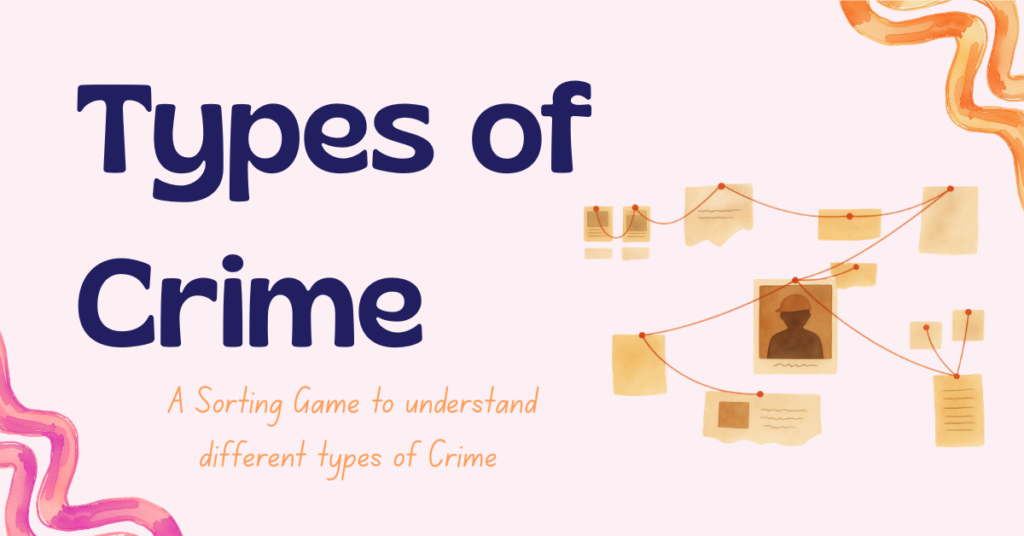
What is this game?
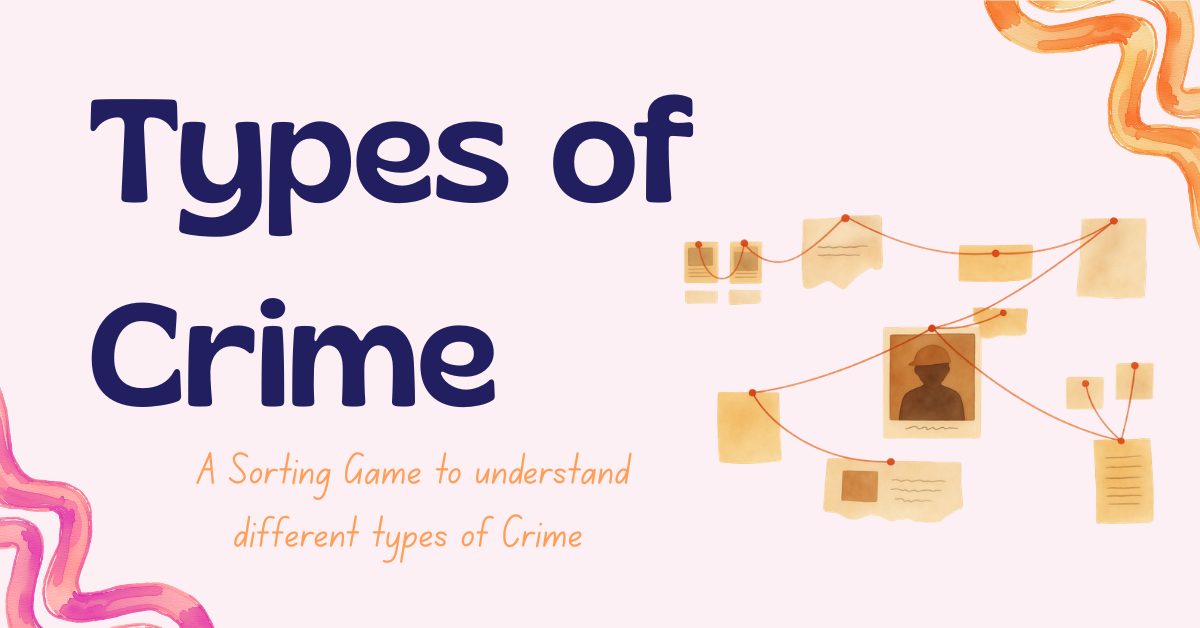
Think you know your laws? Put your knowledge to the test with our Crime Card Sort! This interactive challenge takes 20 real-life examples of criminal offences and asks you to do one thing: sort them into the correct legal category.
It sounds simple, but you’ll have to think carefully. Do you know which crimes are classified as hurting people, which target property, and which are crimes against the state itself?
What will I learn?
- The Three Categories: You will master the distinctions between crimes against people, property, and the state.
- Real-World Definitions: Hover over any card to get a clear, simple explanation of the crime. From “perjury” to “burglary,” you’ll walk away knowing exactly what these terms mean.
- Legal Reasoning: You will develop the critical thinking skills needed to categorise offences, just like legal professionals do.
How to play
- Drag and Drop: Grab a crime card and drag it into the corresponding category zone.
- Check Your Work: Once you have sorted all 20, click the “Check Answers” button.
- Learn from Mistakes: If a card turns red, don’t worry! You can see exactly what you missed.
- Master It: Hit the “Reset” button to reshuffle and try again until you achieve a perfect score!
Play the Game
https://learningrmps.my.canva.site/crime-card-sort
(Embed your Canva game link here)
For Teachers: How to use this resource.
The Crime Card Sort is designed as a high-impact hook to launch your unit on Crime and the Law. Rather than starting with dry definitions, this activity invites pupils to begin thinking critically about the fundamental nature of crime.
Why it works in the classroom:
- Defining “Crime” vs. “Rule”: This activity serves as an excellent starting point for a class discussion on the distinction between a societal rule and a legal crime.
- Prompts Deep Inquiry: By sorting the cards, pupils are naturally prompted to ask: Why does the state care about this action? How is this different from a classroom rule?
Suggested Use: Use this as a 10-minute “lesson hook” to spark that initial debate. It is the perfect way to get pupils categorising and questioning the nature of the law before you move into more complex legal theory.discussion, or as a low stakes digital homework task to reinforce vocabulary before a summative assessment.