What is this game?
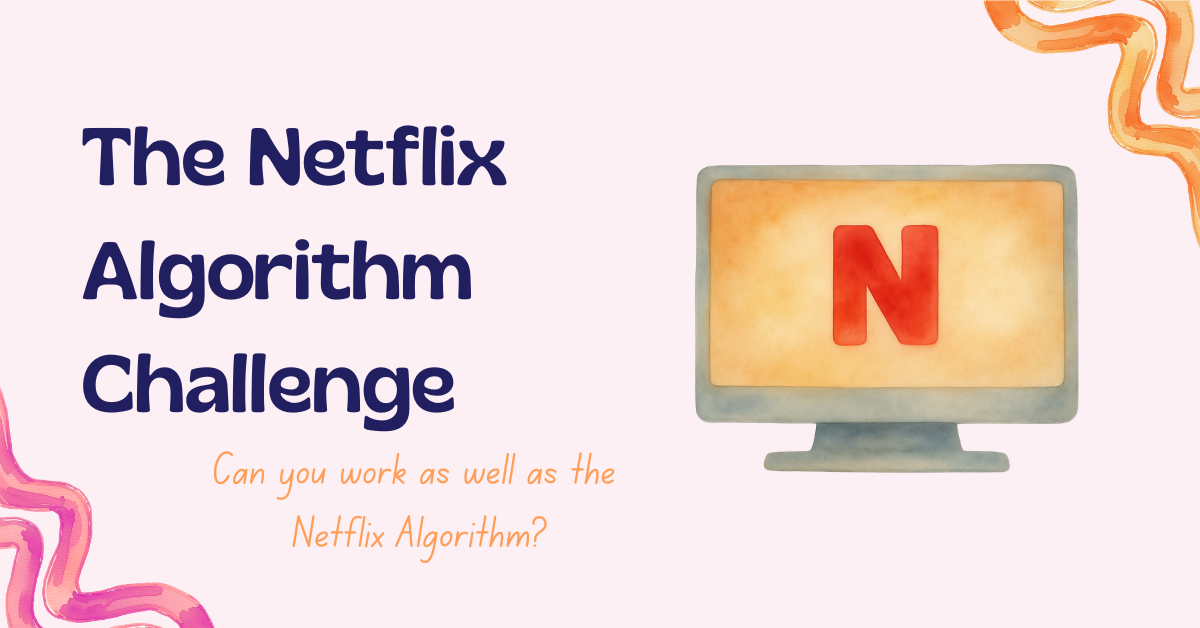
Ever wonder how Netflix or TikTok knows exactly what you want to watch next? It isn’t magic—it’s an algorithm. In the TV Recommender Challenge, you step into the role of the algorithm.
You will be presented with 7 unique viewer profiles—each with their own personality, age, lifestyle, and mood. Your task is to browse 36 popular TV shows and make the perfect recommendation for each person. Be careful! If you suggest a gritty true-crime documentary to someone looking for a “gentle, cosy” watch, your score will plummet.
What will I learn?
- How Algorithms “Think”: You will learn that AI recommendations are based on matching data points (genre, mood, time commitment) to user profiles.
- Media Literacy: You will practice “reading between the lines” to understand what different audiences actually need and value.
- User Empathy: You will discover that technology is only as good as the understanding behind it. Can you balance the data to make a perfect match?
Play the Game
https://learningrmps.my.canva.site/interactive-tv-recommendation-card-sort-for-viewer-profiles
For Teachers: AI, Ethics, and the Human Element
This activity serves as an excellent, hands-on introduction to a unit on Artificial Intelligence and Ethics. While the game focuses on media consumption, it opens up a critical RMPS discussion about how algorithms influence our worldview.
Why it works in the classroom:
- The AI Hook: It demystifies the “black box” of recommendation engines. Pupils realise that the “choices” an AI makes are actually just mathematical calculations based on preferences.
- Ethical Reflection: Use this to launch a discussion about the consequences of these choices. If an algorithm only shows us what it thinks we want, how does that impact our ability to encounter new, challenging, or diverse ideas?
- Critical Thinking: It moves beyond the mechanics of “How does it work?” to the moral question of “Should we let it?”
Suggested Discussion Questions:
- The “Filter Bubble”: If we only ever get perfect recommendations based on our current mood, do we ever get the chance to discover something new and unexpected?
- Bias in the System: The game scores you based on specific criteria. Who decides what makes a “good” recommendation? Could the algorithm be biased toward certain types of content?
- Human vs. Machine: Why did you choose that specific show? Was it just the data, or did you use your own intuition and empathy? Can an AI ever truly understand human taste?
- Ethics of Content: When recommending shows, should an AI prioritise what the user wants (e.g., more of the same) or what might be good for them?
Suggested Use: Use this as a 10-minute “lesson hook” to spark a debate on the ethics of AI. It provides a common experience for your class, making the abstract discussion of algorithms concrete, relatable, and—most importantly—up for debate!
Check out these other Resources