The following are some case studies that may be used when thinking about Capital Punishment in the UK. Some of the below cases are people wrongly convicted of crimes – leading to their wrongful execution. Some of these people were executed when some argue they shouldn’t be and others were not executed when some argue that they should have been.
Timothy Evans
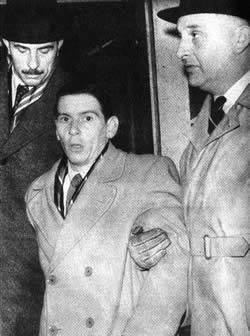
Imagine living in a time where you could be sentenced to death based on a confession extracted under pressure and misleading statements. That’s exactly what happened to Timothy Evans, a young man who was wrongfully convicted of killing his wife and daughter in 1950.
Evans, born in 1924, was a Welshman who moved to London with his wife, Beryl, and their daughter, Geraldine. They lived in a flat at 10 Rillington Place, a building now infamous for its dark history.
In December 1949, Beryl Evans went missing, and Timothy reported her disappearance to the police. A few days later, Geraldine’s body was found in the coal cellar of their flat. Timothy was arrested and charged with the murder of both his wife and daughter.
Under intense interrogation, Timothy confessed to killing Geraldine but denied killing Beryl. His confession was later retracted, but it was too late. The police were convinced they had their man, and Timothy was convicted of murder and sentenced to death.
Tragically, Timothy’s innocent pleas fell on deaf ears. In 1950, he was hanged at Pentonville Prison, leaving behind a family devastated and a society grappling with the possibility of a wrongful conviction.
Timothy Evans’s story took a shocking turn in 1953 when his neighbor, John Christie, was arrested for the murders of eight women, including Beryl Evans. Christie confessed to the killings and was hanged, leaving behind a trail of suspicion and unanswered questions.
Evans’s family never gave up on the fight for his exoneration. In 1965, they launched a public campaign to clear his name, and in 1966, the Appeal Court quashed Timothy Evans’s conviction and declared him innocent.
Read More
https://www.bbc.co.uk/blogs/wales/entries/cdc56160-91eb-366d-ae0e-5d9c5a676fe2
https://criminology.research.southwales.ac.uk/criminology-blog/tragic-life-and-death-timothy-evans/
Ruth Ellis
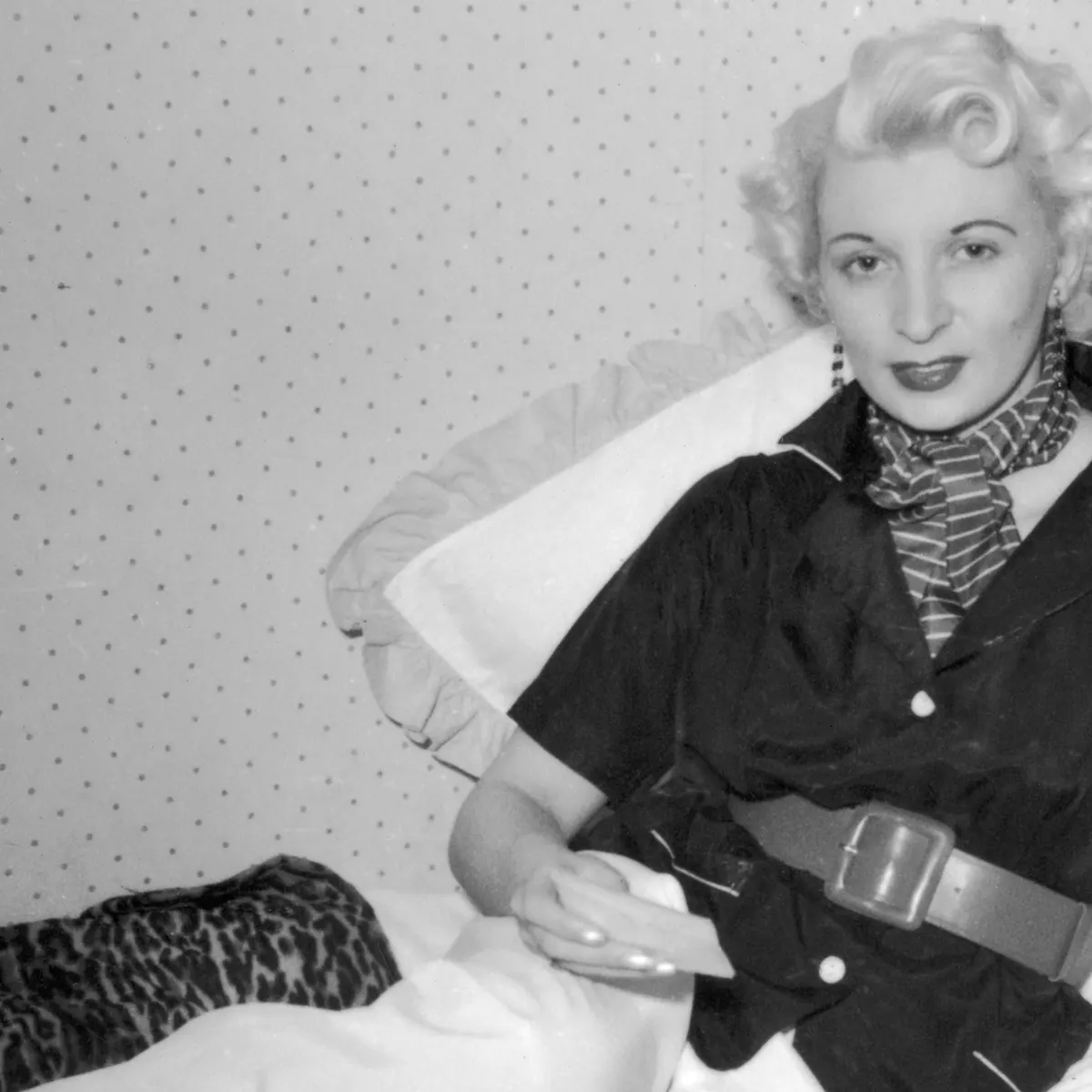
Ruth Ellis was a young woman who lived in Britain after World War II. She had a difficult childhood, marked by poverty, neglect, and abuse. This troubled upbringing left her emotionally fragile and vulnerable to manipulative relationships.
At the age of 17, Ruth met David Blakely, a charismatic but troubled man. Their relationship was passionate and intense, but it was also volatile and abusive. Blakely was controlling and possessive, and he often subjected Ruth to physical and emotional violence.
One evening in 1955, Ruth and David argued at a pub in Hampstead, London. David was drunk and angry, and he threatened to leave Ruth for another woman. Driven by desperation and fear, Ruth pulled out a revolver and shot David three times.
Ruth was arrested and charged with murder. Her trial was highly publicized, and she was widely condemned for her actions. The defense tried to argue that Ruth was a victim of domestic violence, but the jury was swayed by the prosecution’s emphasis on her adultery and her supposed “uncontrollable temper.”
In July 1955, at the age of 28, Ruth Ellis was hanged at Holloway Prison. Her execution was the last time a woman was hanged in Britain. Her case sparked a national debate about domestic violence and the role of women in society.
Ruth Ellis’s story is a tragic one, but it also serves as a reminder of the devastating impact of abuse and the importance of fighting for justice.
Read More
https://www.theguardian.com/uk-news/2018/mar/12/ruth-ellis-files-bbc-documentary-murder-case-cant-let-go
http://news.bbc.co.uk/onthisday/hi/dates/stories/july/13/newsid_2745000/2745023.stm
Derek Bentley
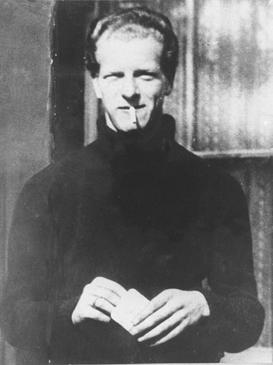
The story of Derek Bentley is a tragic tale of a young man caught in the crossfire of a tumultuous time in British history. Born into a working-class family in Croydon, London, Derek was raised in a difficult environment marked by poverty, neglect, and abuse. His troubled upbringing left him emotionally vulnerable and susceptible to manipulation.
At the age of 18, Derek became involved in a group of petty criminals who were known for their involvement in burglary and theft. In 1953, Derek was arrested for his involvement in a burglary attempt, during which police officer Sidney Miles was tragically shot and killed.
Derek was sent to trial alongside his friend Christopher Craig, who was the one who actually fired the fatal shot. During the trial, it was revealed that Derek had shouted “Let him have it, Chris!” in an attempt to encourage Craig to shoot at the police officer.
Despite Derek’s pleas that he had not intended for anyone to be killed, he was convicted of murder and sentenced to death. He was executed at Wandsworth Prison on January 28, 1953, at the age of 19.
Derek Bentley’s case sparked a national debate about the death penalty and the age of criminal responsibility. His supporters argued that he was a victim of circumstance and that he should not have been executed for the actions of another person.
In 1998, after years of campaigning by Derek’s family and supporters, his conviction was posthumously quashed by the Court of Appeal. The court ruled that the trial judge had misdirected the jury and that Derek had not intended to kill or encourage Craig to kill.
Read More
https://www.bbc.co.uk/bitesize/guides/znkfsk7/revision/8
https://www.thejusticegap.com/a-victim-of-british-injustice-derek-bentley-remembered/
Ian Brady and Myra Hindley
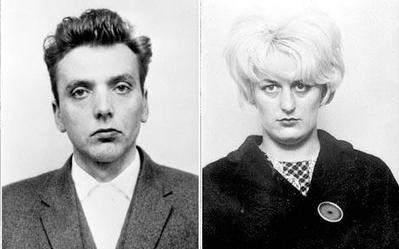
The Moors Murders were a series of child killings committed in the United Kingdom in the 1960s by Ian Brady and Myra Hindley. The couple abducted, tortured, and murdered five children between the ages of 10 and 17. Their victims were buried on Saddleworth Moor, a remote location near Manchester.
Brady and Hindley were apprehended in October 1965. They were found guilty of the murders of three of their victims and sentenced to life imprisonment. The case shocked the British public and led to calls for the restoration of the death penalty.
In 1969, the British government announced that it would abolish the death penalty for murder. This decision was made in part due to the controversy surrounding the Moors Murders and the belief that the death penalty was not a deterrent to crime.
However, the debate about the death penalty has continued in the United Kingdom ever since. The Moors Murders remain a potent symbol of the arguments for and against capital punishment.
Supporters of capital punishment argue that it is a necessary deterrent to crime and that it is the only appropriate punishment for the most heinous crimes. They also point to the Moors Murders as an example of a crime that is so horrific that it justifies the death penalty.
Opponents of the death penalty argue that it is cruel and unusual punishment that violates the human right to life. They also argue that it is not an effective deterrent to crime and that it is applied unfairly. They point to the fact that the Moors Murders were committed in a country where the death penalty was not in force at the time.
Read More
http://news.bbc.co.uk/1/hi/uk/659266.stm
https://news.sky.com/story/the-moors-murders-the-victims-of-ian-brady-and-myra-hindley-10879310
Mary Bell
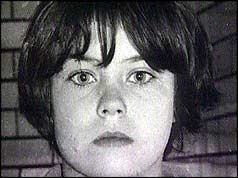
Born in Newcastle upon Tyne, England, on May 26, 1957, Mary Bell’s early life was marked by instability and neglect. Her mother, Betty, was a troubled woman with a history of mental illness and substance abuse. She often left Mary in the care of others, including her equally troubled sister, Norma Bell.
Mary’s home environment was chaotic and violent, with constant arguments and physical altercations. She was often exposed to domestic abuse and witnessed her mother’s volatile relationships. This deprived upbringing left Mary emotionally scarred and lacking in proper guidance and support.
At the age of 10, Mary embarked on a disturbing pattern of behavior. She began to bully other children, engaging in acts of violence and cruelty. She also developed an obsession with death, writing morbid poems and drawings.
On May 25, 1968, Mary’s dark impulses culminated in tragedy when she strangled four-year-old Martin Brown in a secluded park. She then left a taunting note for his mother, signed “M.”
Nearly two months later, on July 31, 1968, Mary and her 13-year-old sister Norma Bell lured three-year-old Brian Howe to a nearby woodland area. There, Mary strangled Brian and then carved the letters “M” and “N” into his stomach.
The brutal murders of Martin Brown and Brian Howe shocked the community of Newcastle and sent shock waves through the nation. The police launched a massive investigation, but the identity of the killer remained a mystery.
After months of intense scrutiny, the police finally identified Mary and Norma as the prime suspects. They were arrested and charged with the murders of Martin Brown and Brian Howe.
At their trial, held in December 1968, Mary and Norma were found guilty of the manslaughter of Martin Brown and Brian Howe. Mary was cleared of murder but convicted on the grounds of diminished responsibility. Norma Bell was acquitted of all charges.
Mary Bell was sentenced to be detained at Her Majesty’s Pleasure, a legal term in England and Wales for a life sentence for a juvenile offender. She spent the next 12 years in various secure institutions. In 1980, at the age of 23, Mary Bell was released from custody. She was given a new identity and placed under the supervision of the Probation Service. She went on to live a quiet life, working as a hairdresser and raising a family.
Read More
http://news.bbc.co.uk/onthisday/hi/dates/stories/december/17/newsid_3261000/3261087.stm
https://thecrimewire.com/multifarious/Murderous-Children-Mary-Bell
Henry John Burnett

Henry John Burnett was a Scottish man who was convicted of the murder of merchant seaman Thomas Guyan and hanged at Craiginches Prison in Aberdeen on August 15, 1963. He was the last person to be executed in Scotland.
On May 31, 1963, Thomas Guyan was found dead at his home in Aberdeen. He had been shot in the face with a shotgun. Police quickly identified Henry John Burnett as a suspect in the murder.
Burnett was a 21-year-old laborer who had been having an affair with Guyan’s wife, Margaret. On the night of the murder, Burnett had been seen arguing with Guyan. He had also been seen near Guyan’s house with a shotgun.
Burnett was arrested and charged with Guyan’s murder. At his trial, he pleaded guilty to the murder but claimed that he was insane at the time of the crime. The jury rejected his insanity defense and found him guilty of murder.
Burnett was sentenced to death. His execution was scheduled for August 15, 1963.
In the days leading up to his execution, Burnett’s lawyers filed a petition for clemency with the Home Secretary, Duncan Sandys. The petition argued that Burnett was mentally ill and that his execution would be a cruel and unusual punishment.
Sandys considered the petition, but he ultimately decided to uphold the jury’s verdict. He declined to grant Burnett a reprieve.
Read More
https://www.bbc.co.uk/news/uk-scotland-23685786
https://www.aberdeenlive.news/news/scottish-news/i-gave-both-barrels-chilling-6515450